
Investing in silver: the main ways to get exposure and what can go wrong
Silver is both a precious metal and an industrial raw material, which makes it swing harder than gold. Here is what drives the price and how the main ways of holding it differ in cost and risk.
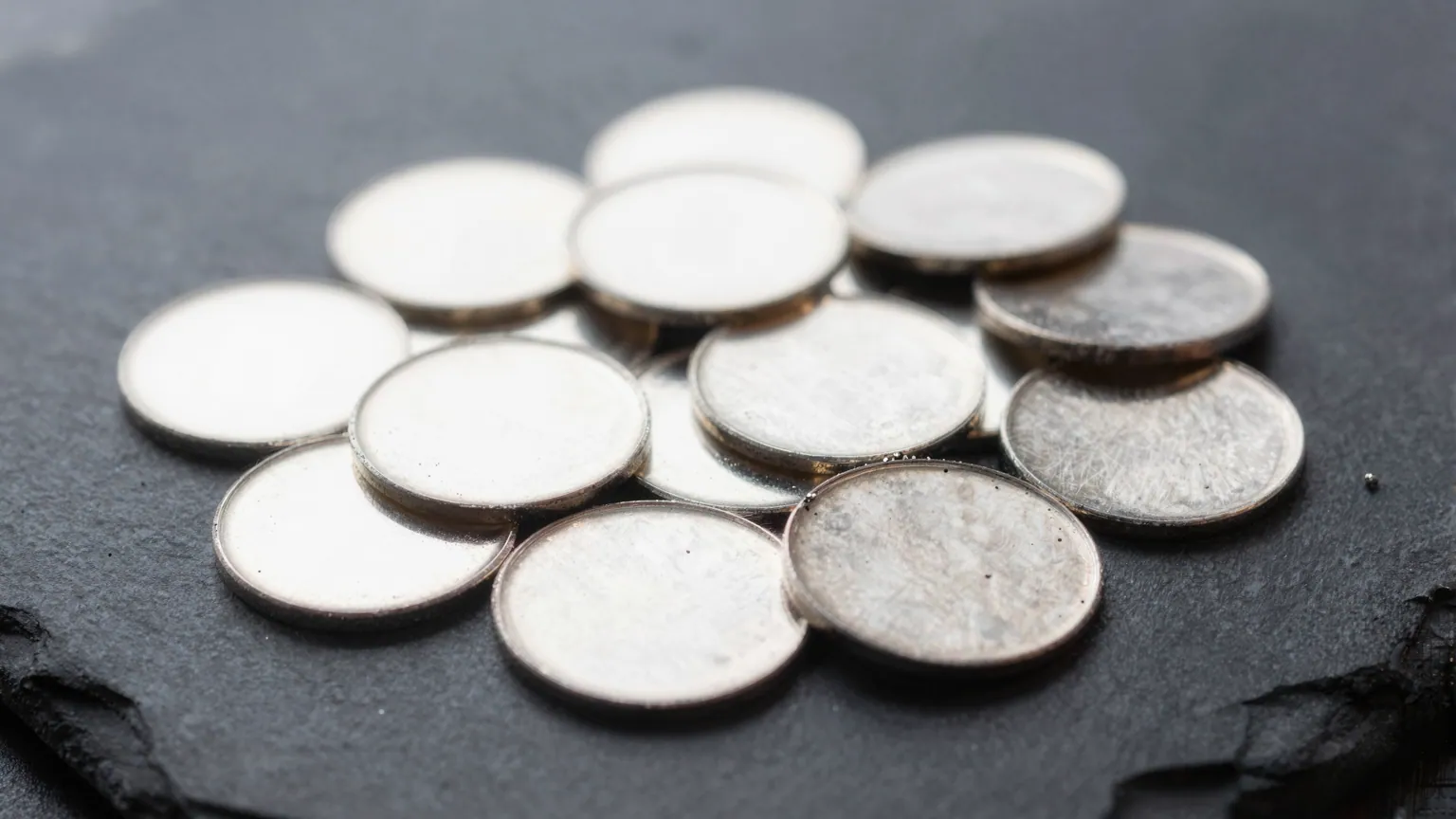
Silver has two jobs. Investors hold it as a store of value, much like gold, and manufacturers use it in electronics, solar panels, brazing alloys and medical products. Because of that split, the silver price responds both to fear and inflation worries and to the state of the industrial economy. This guide covers what moves the price, the main ways of investing in silver, what each one costs and where the risks are.
What drives the silver price
- Industrial demand. Silver conducts electricity better than any other metal, so it is hard to replace in electrical contacts, circuit boards and photovoltaic cells. Industrial use is the largest single source of demand, which means an economic slowdown can weigh on the price.
- Investment demand. Buying of bars, coins and exchange-traded products rises and falls with inflation fears, interest rates and general risk appetite.
- The US dollar and real interest rates. Silver is priced in dollars per troy ounce. A weaker dollar and lower real interest rates have tended to support precious metals, and the opposite has tended to weigh on them, although the relationship is not fixed.
- Supply. Most silver is mined as a by-product of lead, zinc, copper and gold mining, so output does not respond quickly to the silver price alone. Recycling of scrap adds to supply when prices are high.
- Gold. Silver often moves in the same direction as gold but with larger swings. Traders follow the gold to silver ratio, the number of ounces of silver needed to buy one ounce of gold.
Ways of investing in silver
Physical silver: bars and coins
You own the metal outright and do not depend on a fund or a broker. In exchange you pay for safe storage and insurance, either at home or in a vault. Dealers sell above the spot price and buy back below it, and the gap is wider for small coins than for large bars. In the UK the VAT exemption covers investment gold only, so dealers normally add VAT to silver, and tax treatment in the EU varies by country. Where VAT applies it adds a large one-off cost that the price has to recover before you break even.
Exchange-traded products (ETFs and ETCs)
Silver ETPs trade on stock exchanges like shares. Many hold physical silver in a vault on behalf of investors, while others use futures contracts. They follow the price without any storage hassle and can be bought through an ordinary investment account. Costs include an annual management fee, and some products carry issuer or counterparty risk. Futures-based products can also drift from the spot price because of the cost of rolling contracts.
Futures and options
Silver futures are standardised exchange contracts to buy or sell a set quantity on a future date. The benchmark COMEX contract, traded on CME Group exchanges, covers 5,000 troy ounces, and smaller contract sizes exist. Options give the right, but not the obligation, to buy (a call) or sell (a put) at a fixed price. Futures are leveraged and losses can exceed the margin posted, so they are used mainly by producers, industrial buyers and experienced traders.
Mining and streaming company shares
Shares in silver miners, or in streaming and royalty companies that finance mines in return for a share of future output, tend to move more than the metal itself. They also carry company risks: costs, debt, management decisions, accidents and the politics of the countries where the mines operate. A mining share can fall while silver rises.
Silver CFDs
A contract for difference lets you speculate on the silver price, usually quoted as XAG/USD, without owning any metal. You can go long if you expect the price to rise or short if you expect it to fall. You deposit a margin, but profit and loss are calculated on the full position size. CFDs are designed for short-term trading rather than long-term holding, because a financing charge applies for every night a position stays open. See what CFD trading is for the basics.
Comparing the options
| Method | You own silver? | Main costs | Main risks |
|---|---|---|---|
| Bars and coins | Yes | Dealer premium, VAT where it applies, storage, insurance | Theft or loss, wide buy and sell gap |
| Physically backed ETPs | Indirectly, through the fund | Annual fee, dealing costs | Issuer and custody risk |
| Futures and options | No, unless delivery is taken | Commission, roll costs | Leverage, losses beyond margin |
| Mining shares | No | Dealing costs | Company and country risk |
| CFDs | No | Spread, overnight financing, possible commission | Leverage, gaps, provider counterparty risk |
Costs of trading silver CFDs in detail
- Spread: the difference between the buy and sell price, paid on every trade.
- Overnight financing: a daily charge on positions held past the provider's cut-off time. Over weeks or months it adds up.
- Commission and other fees: some providers charge commission, currency conversion or inactivity fees.
- Guaranteed stop premium: paid only if you use a guaranteed stop, which protects against price gaps.
Before any trade, read the contract specification: contract size, minimum trade, spread, trading hours, margin requirement and the financing rate. Our silver price page shows the XAG/USD chart, and the guide to leverage and margin explains how margin is calculated.
Leverage rules and risks
Under ESMA rules in the EU and the equivalent FCA rules in the UK, retail clients can use leverage of at most 10:1 on commodity CFDs other than gold, which includes silver. That means a margin of at least 10% of the position value. Retail clients also get negative balance protection, and positions are closed out when account equity falls to 50% of the required margin.
At 10:1 leverage, a 10% move against you wipes out the whole margin on that position, and silver can move several percent in a single day. Other risks to keep in mind:
- Gaps. Prices can jump between sessions or on news, so an ordinary stop-loss may be filled at a worse price than you set.
- Holding costs. Financing charges eat into returns on positions held for a long time.
- Counterparty risk. A CFD is a contract with your provider, not ownership of metal.
Regulated CFD providers must publish the share of their retail accounts that lose money, and it is typically a majority. Only trade with money you can afford to lose and with a firm authorised by your national regulator.
Silver or gold?
Gold is mostly held as a store of value by investors and central banks. Silver has a far larger industrial role, a smaller market and bigger price swings. Some investors hold both, sizing the silver part smaller because of its volatility. For the gold side of the comparison, read our guide to investing in gold.
Sources: COMEX rulebook, chapter 112 (silver futures); ESMA CFD restrictions; FCA CFD restrictions; HMRC VAT Notice 701/21 on investment gold (the exemption is limited to gold).
Frequently asked questions
What is the best way to invest in silver?
There is no single best way. Physical silver and physically backed ETPs suit long-term holders, futures and CFDs are leveraged tools mostly used for short-term trading, and mining shares add company risk on top of the metal price. The right choice depends on your time horizon, costs and how much risk you can carry.
Is silver more volatile than gold?
Usually, yes. The silver market is much smaller than the gold market and a large share of demand comes from industry, so the price reacts to the economic cycle as well as to investor sentiment. Daily and yearly swings in silver have historically been larger than in gold.
Do you pay VAT on silver bullion?
In the UK the VAT exemption covers investment gold only (HMRC VAT Notice 701/21). Silver is not part of it, so dealers normally add VAT to silver bars and coins. VAT treatment in the EU differs by country and by dealer scheme. Check the rules in your own country and the dealer's invoice before buying.
How much leverage is allowed on silver CFDs?
Under ESMA rules in the EU and the matching FCA rules in the UK, retail clients can use at most 10:1 leverage on commodity CFDs other than gold, which includes silver. That means a margin of at least 10% of the position value, while losses are calculated on the full position.
What is the gold to silver ratio?
It is the number of ounces of silver needed to buy one ounce of gold, found by dividing the gold price by the silver price. Traders watch it to compare the two metals, but the ratio has ranged widely over time and is not a reliable signal on its own.